“Introduction”
Welcome to the second part of what will become a 10-part series of articles on vintage G1 (Generation 1) Transformers by MB (Milton Bradley). In the first part we learned about the history of the Milton Bradley company, how it was established in the 19th century and how it was taken over by Hasbro in 1984. This second part will focus on the pre-Transformers era in Europe.
“Daddy…, Where Do Transformers Come From??”
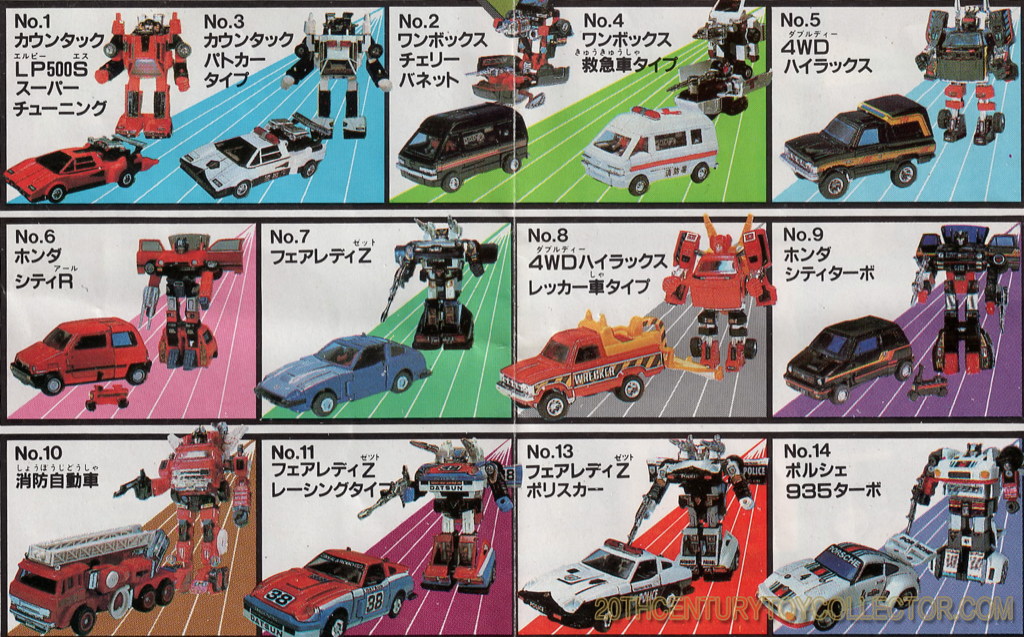
As most serious Transformers collectors will know, the actual toys that most of the early G1 Transformers were based on were not new to this world when Hasbro launched its Transformers line in the US in 1984. The name “Transformers” was new, as were all the character backgrounds and the Transformers mythos, but some of the toys themselves had previously been released as far back as 1981 in Japan by a toy company called Takara. Most of these transformable robots were released under the name Diaclone and Microman.

Takara promotional photo of Diaclone Car Robot line (1983)
Hasbro saw these toys on a Japanese toy fair in 1983 and bought a license from Takara to sell them exclusively in the US for the next year. The Diaclone and Microman toys didn’t really have any extensive background story that was supported by comics or a cartoon. They were just transforming robots with little drivers or pilots who controlled them. The back story according to the toy catalogs that were included with the toys spoke of the Diaclones battling the evil Waruder empire, an alien insect like race bent on conquering the Earth.
Hasbro’s genius was that they decided to unite these two lines into one line and give the line an extensive background story, while introducing the robots as sentient beings who all had different characters! To accomplish this Hasbro called their good friends at Marvel Comics, who then proceded to create all the names and character bios for all the robots of the first year (and many years to come). The robots were divided into Autobots and Decepticons and were given names that would become very familiar to a whole generation of kids in the 1980’s. So succesful was the Transformers formula, that Hasbro ended up selling the concept of the Transformers back to the Japanese! Takara got a license from Hasbro so they could sell their own toys in Japan under the Transformers brand! And guess, what? It became a smash hit there as well. Takara sold more toys than they did in years before under the old Diaclone and Microman line!
“Europe in 1984”
While Hasbro introduced their Transformers in 1984 in the US, several European countries got access to a lot of these same toys, albeit directly under license from Takara and under the name Diaclone. Let’s have a look at the situation in Europe in 1984.
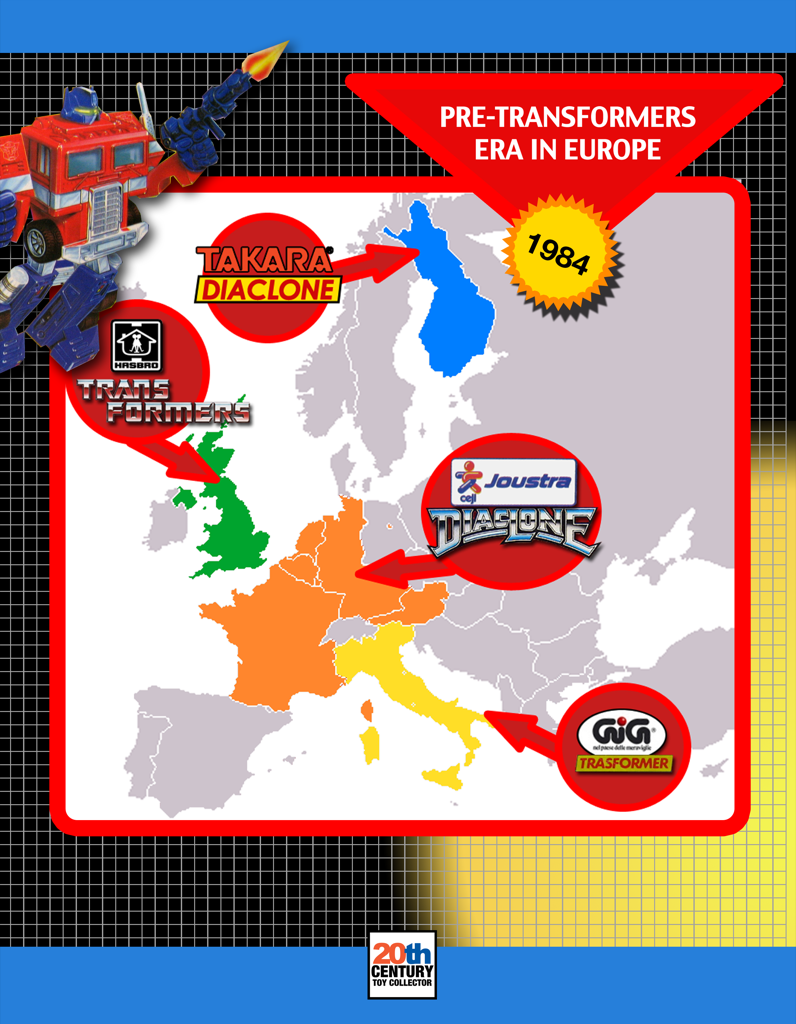
(pre-)Transformers in Europe in 1984
As you can see from the map of Europe above (click on the map for a larger version) there were four companies active in 1984 in Europe selling (pre-)Transformers: In green we have Hasbro UK selling Transformers branded… erm… Transformers in the UK, in yellow we have GiG selling Diaclone transformers in Italy. In blue we see Takara selling Diaclone themselves in Finland and in orange we see that Joustra has got the biggest part of Europe covered with France, West Germany and the Benelux countries. These are generally accepted as the first occurrences of (pre-)Transformers available for sale in Europe. Let’s look at these four operations one by one.
“Hasbro UK”
Of particular interest is that Hasbro was already active in the UK in 1984 selling Transformers, through their Hasbro UK subsidiary. The operation was limited to the UK only, because up until that time that’s the only presence Hasbro had in Europe. The 1984 output of the UK line was severely limited to say the least. The UK saw most of the series 1 Autobots, but the Decepticons were limited to just Soundwave and his cassettes and the Decepticon seeker jets. Megatron wasn’t even part of the introductory line up!

The complete 1984 UK line up. All of it..
Still very little is known about this first year of Transformers in the UK. Why was the line up so limited and what did the packaging look like? Did the UK simply get Transformers from the US? Fact is that the line was supported by a Marvel UK comic, which launched with a cover date of September 1984, so it would be a reasonably safe assumption that was approximately the time when the toyline was introduced in the UK.
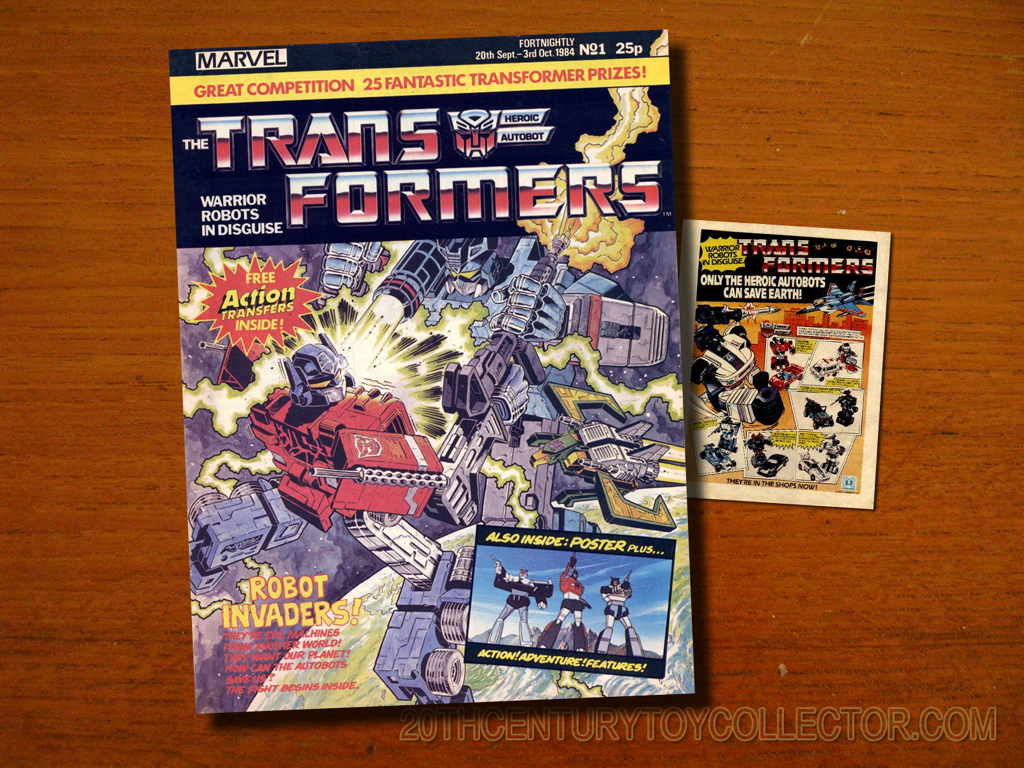
Transformers #1 (Marvel UK)
“GiG pulls a fast one”
In Italy well known toy manufacturer GiG had a licensing deal with Takara to sell Diaclone toys in their territory. GiG released most of the Diaclone toys with very minor alterations to the original Japanese packaging, but they added the word “Trasformer” (sic) to the packaging. This was quite brilliant, because they could use this trademark without paying Hasbro for the undoubtedly way more expensive official Transformers license and still ride the Transformers mania wave that was about to hit Europe. “Trasformer” is not a spelling mistake, by the way, because the Italian verb for “transforming” is “trasformare”, without the “n”. This means they were not violating any trademarks either, because it was different from “Transformers”.
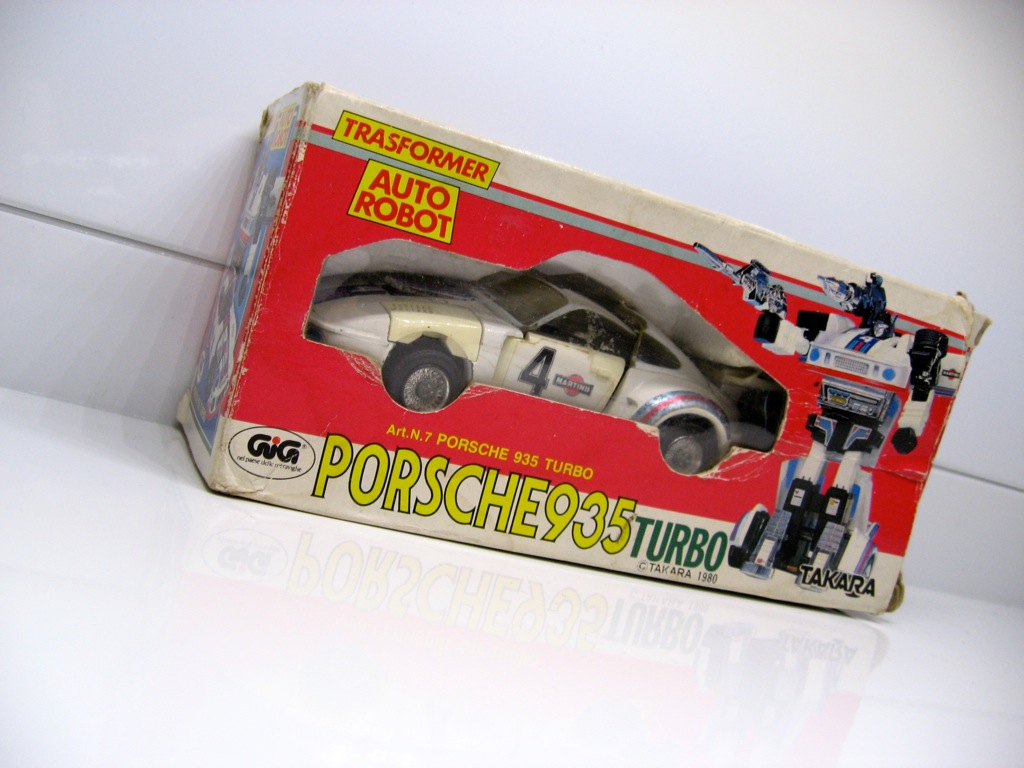
GiG Diaclone Jazz (from my personal collection)
“Finnish Diaclone”
A very peculiar thing happened in Finland. Takara seems to have marketed their Diaclone Car Robot line themselves there. The toys were distributed exclusively through the Finnish R-Kioski chain of kiosks. Some very exciting colour variations were released there, like the black Tracks (Corvette)!!
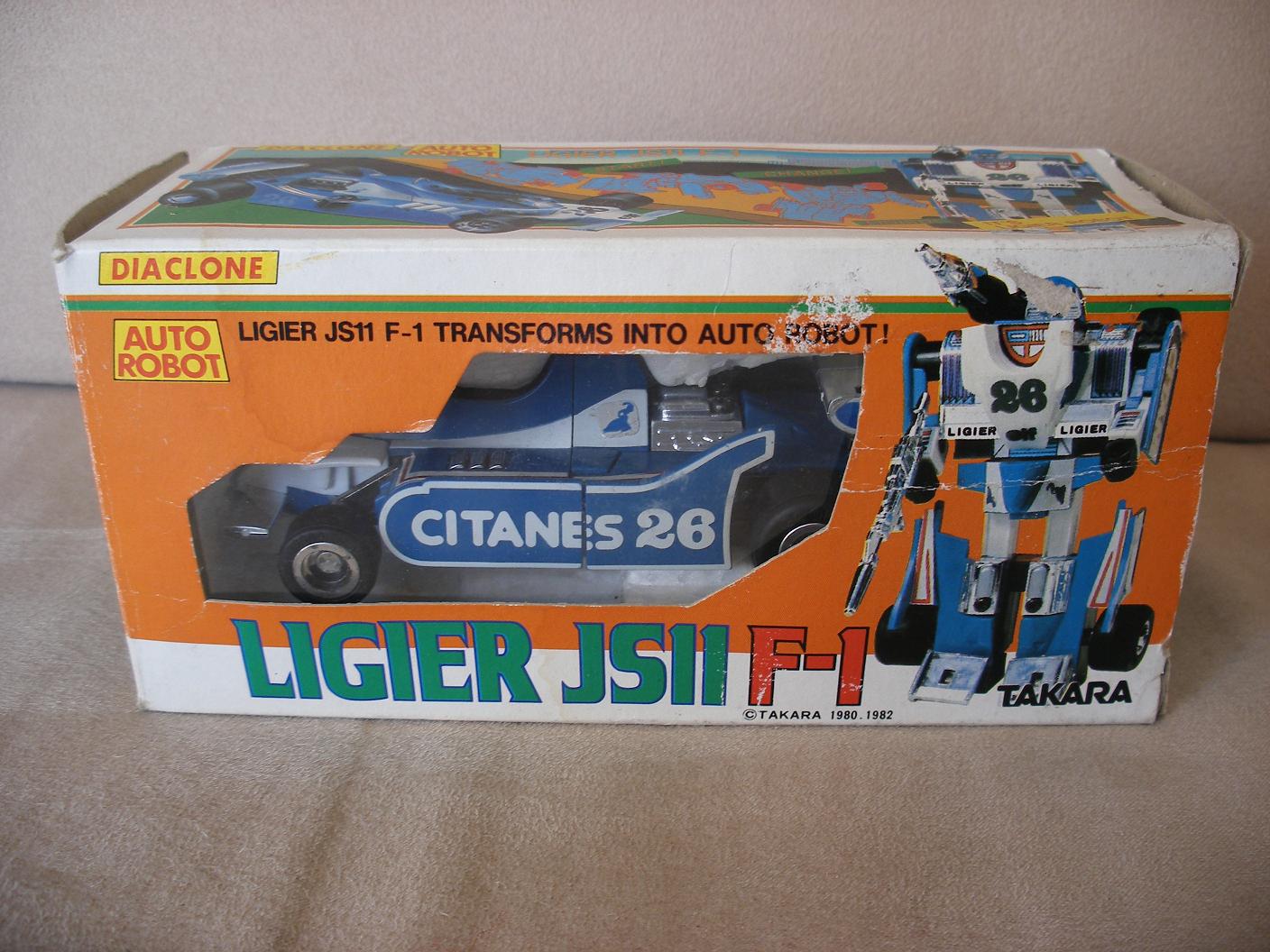
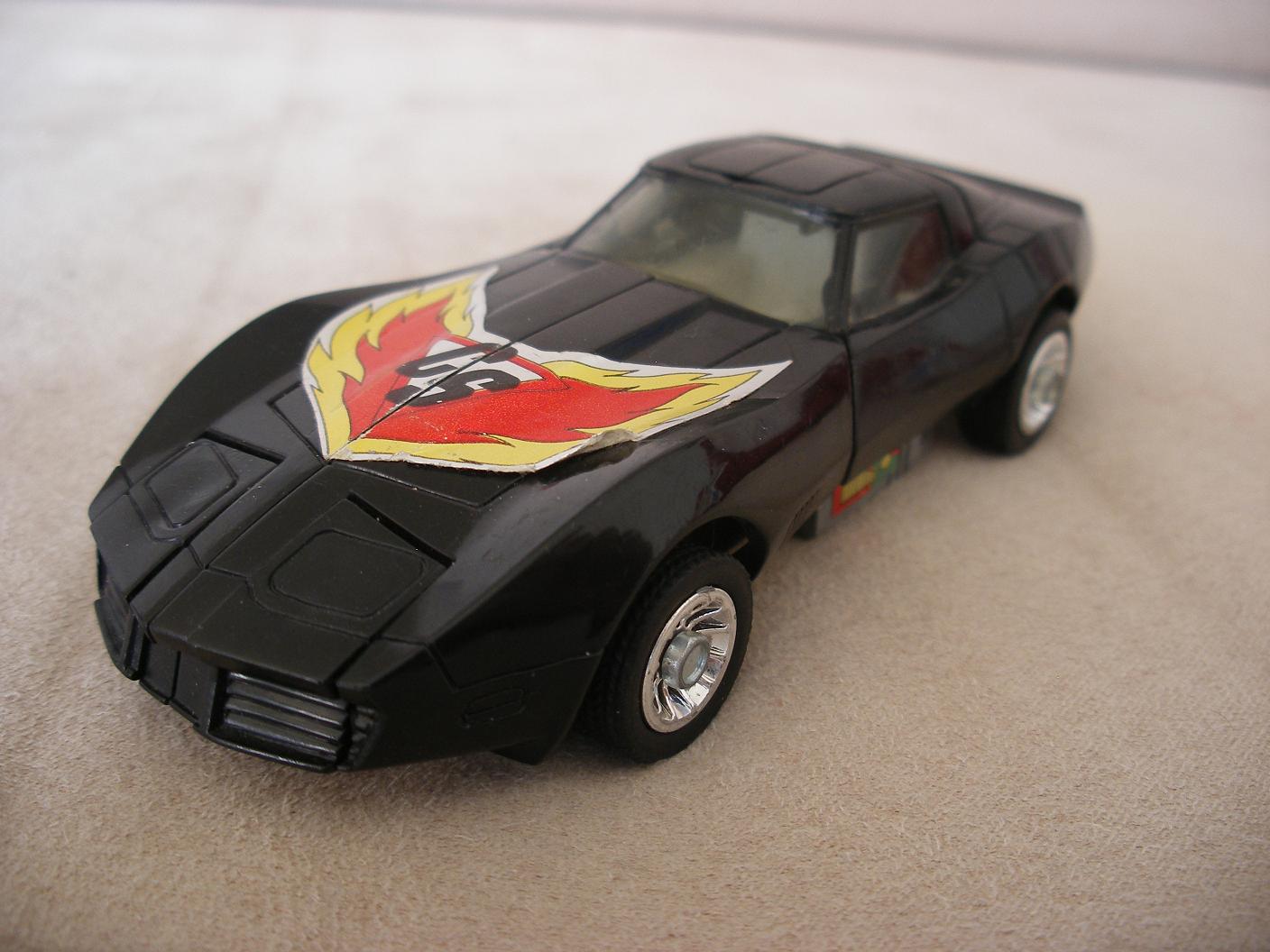
Finnish Diaclones (from the collection of Martin Lund)
“Joustra”
But now let’s focus on the most interesting part: the Diaclone toys that were being sold in most of Western Europe by a company called Joustra. Joustra was founded in 1934 by two brothers, Paul and André Kosmann in Strasbourg, France. The name of the company was a contraction of the words “Jouets de Strasbourg”, which translates into “toys from Strasbourg”. They did well for themselves in their initial years, but the real success of Joustra started after the Second World War when it came under new management by Guillaume Marx, who expanded Joustra’s operations into the rest of Europe.

Old Joustra logo and photo of Strasbourg cathedral
“Ceji”
Another milestone in Joustra’s history comes in 1969, when it is acquired by Ceji. Ceji stands for Compagnie européenne industrielle de jouet (which funnily enough would abbreviate into Ceij, but there you go..) Ceji was a French company which had the ambition of becoming a major worldwide player in the toy industry. It acquired several toy companies and continued to operate them under their original name and the name Ceji as an umbrella brand. That is why Joustra is often referred to as Ceji Joustra. Other operations were Ceji Revell, Ceji Arbois and Ceji Jouef. Each sub brand more or less specialized in a certain segment of the toy market, e.g. Ceji Joustra was long known for its die cast metal toys, Ceji Revell for its model kits, Ceji Arbois for action figures and Ceji Jouef for electronic model train sets.
Ceji logo as used in TV commercials in 1980's
Besides manufacturing their own toys, one of Ceji’s strategies was licensing toys on the international market and so it was that in 1984 the first wave of Diaclone toys were introduced in France, West Germany and the Benelux countries. Ceji released Diaclone product under their Joustra and Revell brands. Ceji Joustra was primarily used for die-cast metal Diaclone and Microchange toys, while Ceji Revell released model kits based on Diaclone toys and some of the plastic Diaclones as seems to be evidenced by the screen captures below from a French television commercial from Ceji Revell from late 1984.
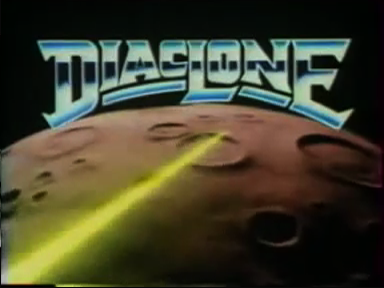
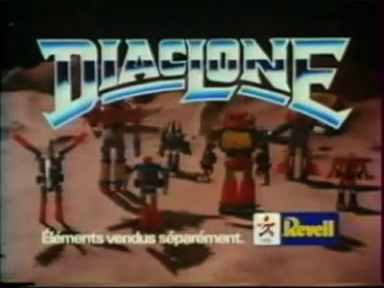
Screen captures from a Ceji Revell Diaclone commercial (1984)
“Joustra Diaclone 1984 wave”
What we’re most interested in is the Diaclone output by Ceji Joustra, because this line contains most of the pre-Transformers we’ve come to know and love. A total of 2 waves of Diaclone toys were released by Joustra. The first wave was released in 1984 and is the most common to find on the collector’s market. Although “common” is a very relatively employed term in this instance. Joustra Diaclones are amongst the rarest pre-Transformers on the market. The second wave was released in 1985 and is even harder to find than the first wave!
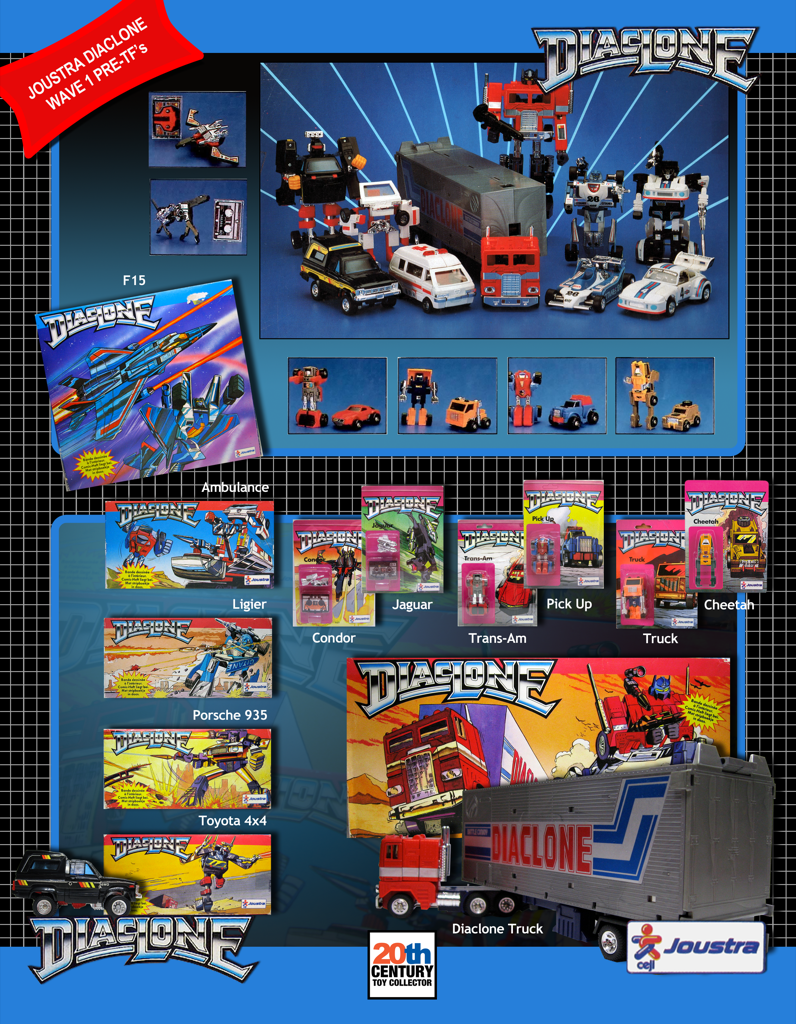
Here’s a nice overview that I put together of all the wave 1 Joustra Diaclone pre-Transformers, i.e. all the molds that were later used by Hasbro for their Transformers universe. The first wave consisted of more robots than are depicted here, but as our focus is on pre-Transformers we’ll limit ourselves to those. Have a look:
Joustra Diaclone - wave 1 (1984)
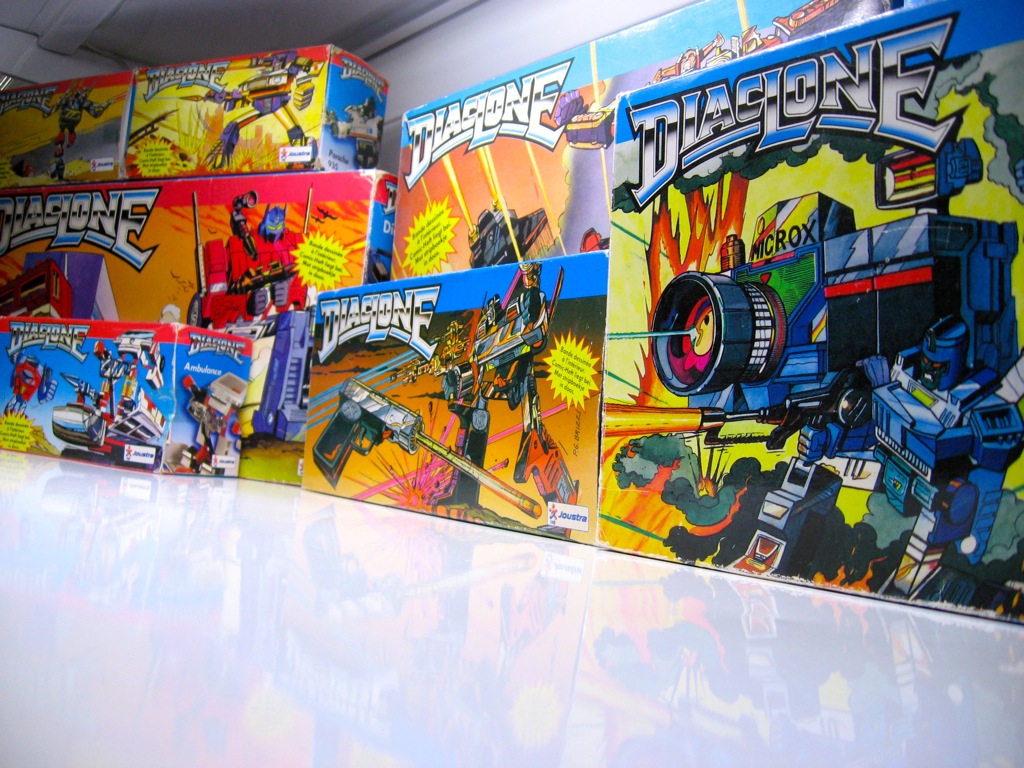
As you can see a lot of familiar faces there, like Optimus Prime, Trailbreaker, Ratchet, Mirage and Jazz. Also note the absolutely beautiful packaging that Joustra created for these toys. Truely original and exclusive to this line. GiG generally just copied the Japanese Diaclone packaging and slapped a Trasformer logo on the box. Now, there’s nothing wrong with the original Japanese Diaclone packaging, but Joustra probably figured that European tastes (or western tastes for that matter) were a bit different, so they decided to completely redesign the packaging! The packaging looks a lot cleaner and less crowded, features a consistent style and the Diaclone logo displayed prominently on the box.
Some of the Joustra Diaclone packaging artwork
Joustra commissioned two talented artists, the Brizzi brothers Paul and Gaetan, to create the exclusive artwork that is featured on all the packaging of the 1st wave of Joustra Diaclones. They also created a series of mini-comics that were included with all the boxed Diaclones. These were generally available in French, German and Dutch and detailed the background story to this line, which already saw the robots as independent and sentient beings! No Diaclone drivers were included with these toys, though this was probably not a consequence of the fact that Joustra created a mythos that featured sentient robots without the need for Diaclone drivers to pilot them. More likely it was the other way around. The little Diaclone drivers were most likely removed due to toy safety regulations in France, so Joustra ultimately had to come up with a story that involved independent, sentient robots.
So what about the toys from the second wave of Joustra Diaclones in 1985? Well, these expanded the line further and saw the introduction of a lot more pre-Transformers like the precursors to Hound, Prowl, Tracks, Sunstreaker, Smokescreen and Ultra Magnus! All of these are incredibly rare and it is only in the past couple of years that these have been popping up online. A fairly accurate estimate exists of which figures were at least planned for release for the second wave by looking at the 1985 Ceji Revell trade/dealer catalog. But only a part of those has ever surfaced in public complete with packaging. I’m hoping to present a similiar overview to the one above of the second wave in the near future. As I do not own any wave 2 Joustra Diaclones and because of the fact that they’re so frickin’ rare, obtaining material is tough, but I am awaiting clearance for the use of several photographs of wave 2 Diaclones from some collectors that I know. So stay tuned for a future update here with a Joustra Diaclone wave 2 overview!
“Made in Japan, Printed in France”
Now, did Joustra manufacture these toys themselves? The answer is no. The packaging and comic books were designed and printed in France, but the actual toys came directly from Takara in Japan. This has been confirmed by a former sales employee of Joustra, Mr. Schilling, in an interview by Sébastien Carletti, author of the “Nos Jouets 70-80” book. Mr. Schilling stated that Takara simply shipped these toys to Joustra. The toys arrived inside their styro foam, complete with sticker sheets, which were slightly adapted to include Joustra’s Diaclone logo. Upon receiving the toys, Joustra simply packaged them inside their custom designed packaging and distributed them to stores in France, West Germany and the Benelux countries.
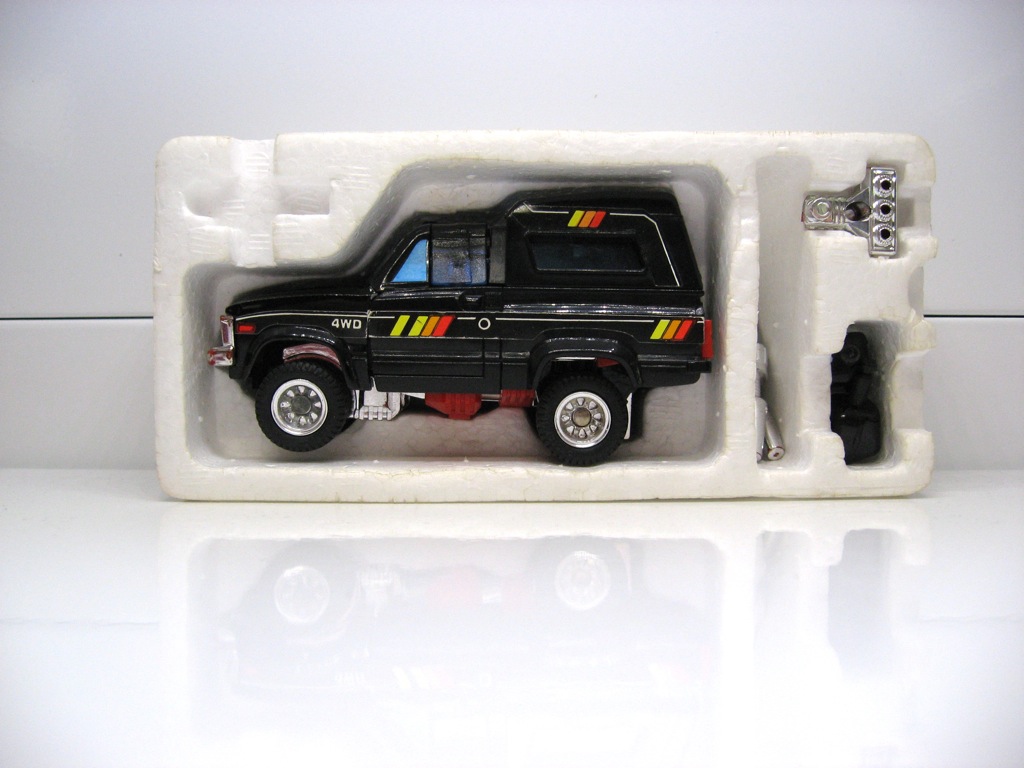
This is how Joustra received Diaclone product from Takara...
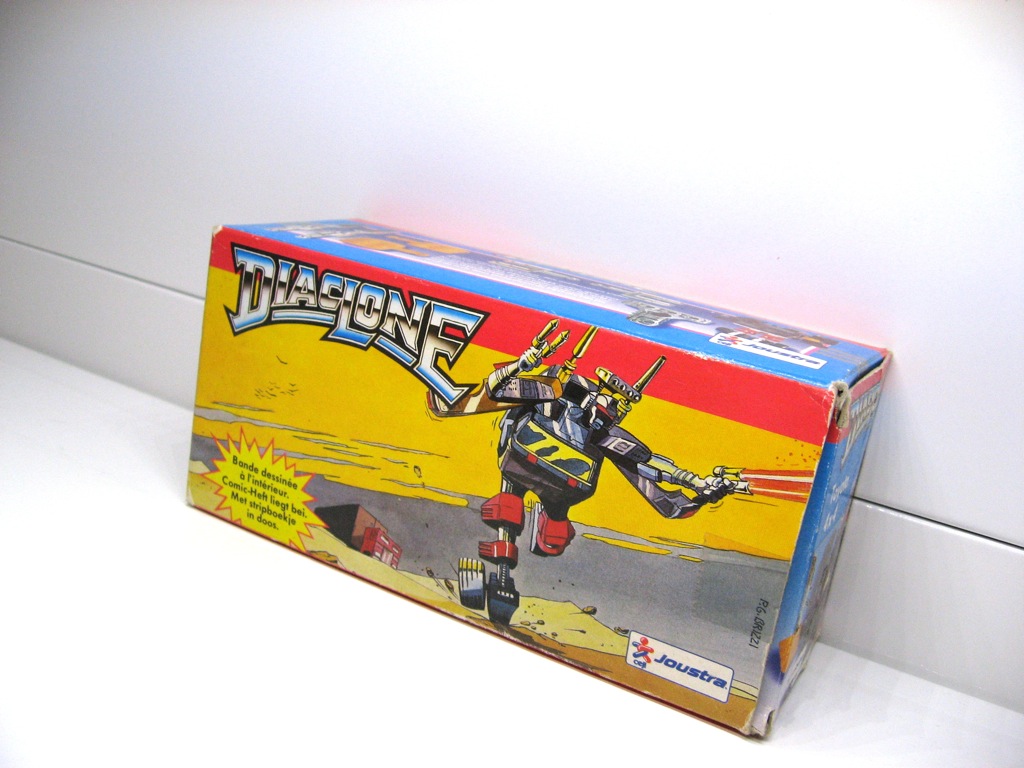
...and this is what ended up in the stores
The same thing happened with the minibots for Joustra’s Diaclone line. These minibots were manufactured by Takara in Japan and then sent off to France, where Joustra packaged them inside their own custom cardback packaging and sold them in Western Europe. Something interesting can be observed though, when looking at some of the Joustra Diaclone minibots. Have a look:
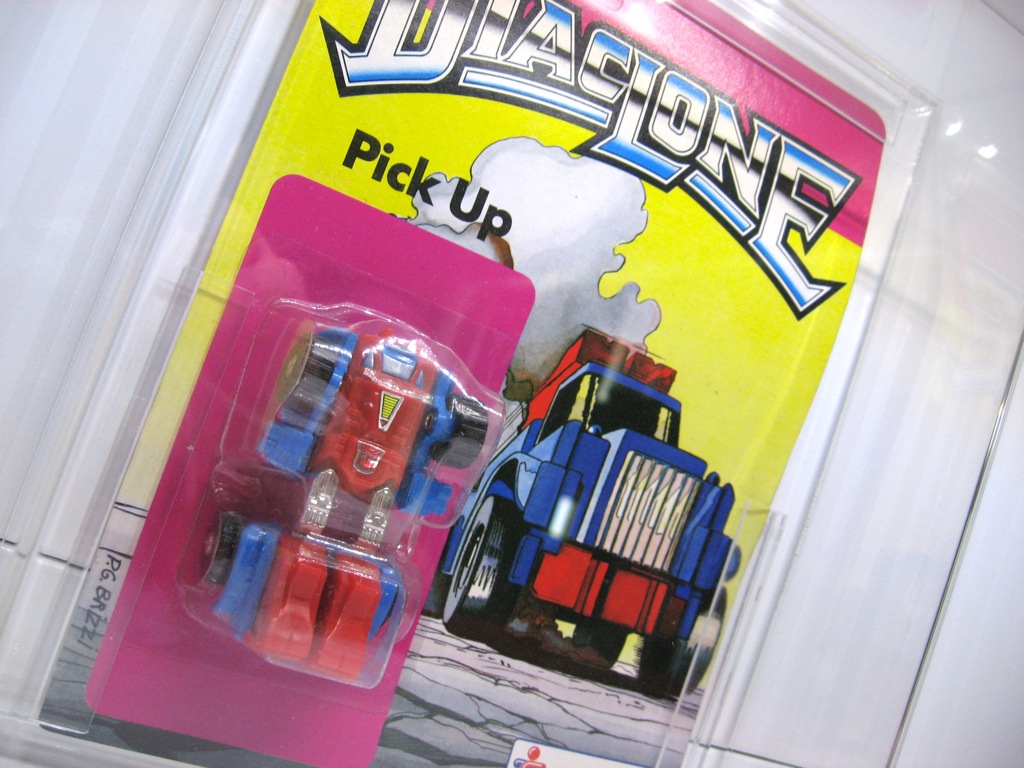
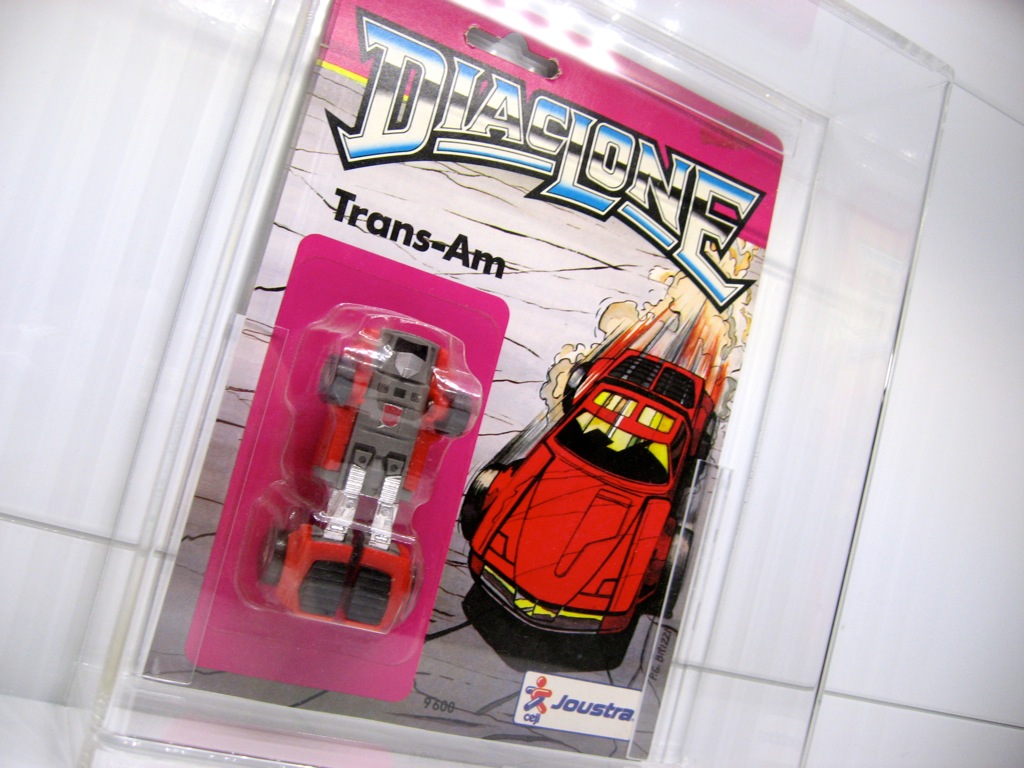
Nice, but what’s so interesting? Well, why don’t we have a closer look at one these Joustra Diaclone mini bots. Let’s take a closer look at Pick Up (Gears):
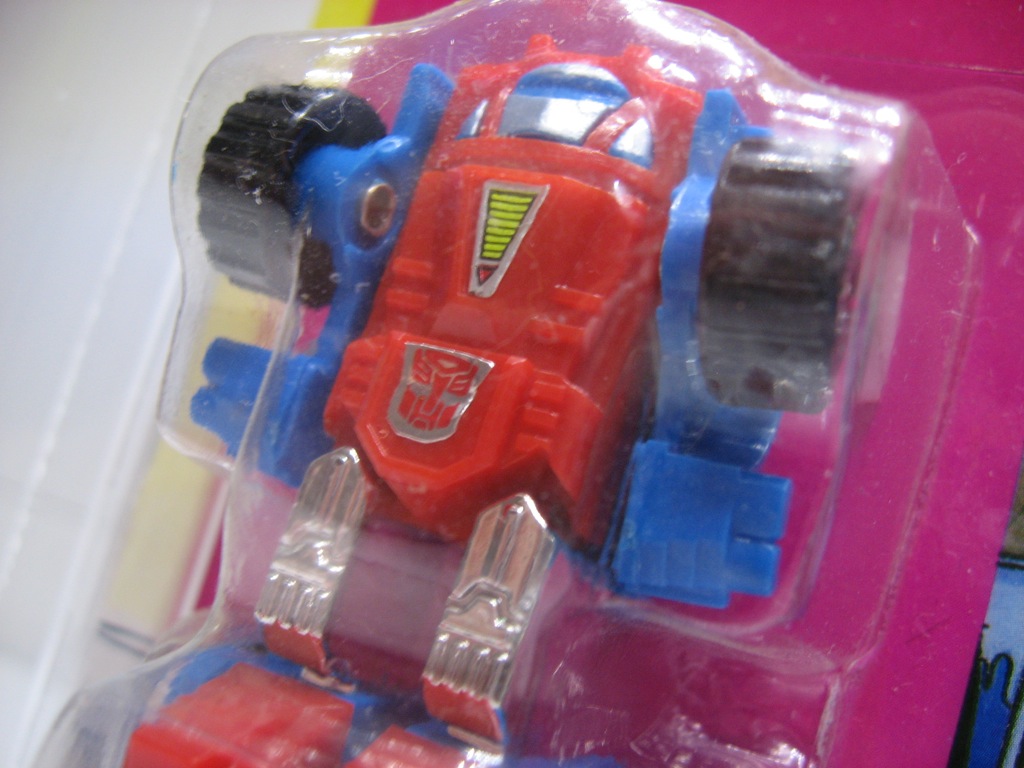
Pick Up has an Autobot symbol on his chest! And so do Trans-Am and Cheetah! But waiddaminute… Wasn’t the Autobot symbol owned by Hasbro and part of the Transformers line? Yes, yes it is. But given what we now know about the origins of these toys it’s not such a surprise anymore. These toys were manufactured by Takara in Japan and sent to Joustra in 1984. The toys that appeared in the US in 1984 under the name Transformers were also manufactured by Takara. So these were probably all from the same production line. The fact that these minibots have Autobot symbols and the bigger Joustra Diaclone cars (like Jazz, Ratchet etc) don’t is because the Autobot symbol was a factory sticker on these mini-bots, while the bigger cars had sticker sheets, which were replaced with proper Joustra Diaclone sticker sheets. It would’ve been a lot more work for Takara to remove all these Autobot symbols than it would to just ship them to Joustra as they were. So they probably just didn’t bother.
“Up Next: Dawn of the Transformers Era!”
And that concludes our look at the pre-Transformers era in Europe around 1984, where we’ve already observed many ties between the Transformers line and its primary predecessor, the Diaclone line. In the next installment we’re going to look at 1985. This is the year that the Transformers line was really properly introduced in Europe under that name by MB. So stay tuned for the next chapter as we look at the dawn of the Transformers era in Europe!
Credits:
- Thanks to Maz for the photograph of Joustra Diaclone Ligier! Visit his awesome site at TF-1.com!
- Photo of Strasbourg by Jonathan Marz (published under GPLv2).
- Thanks to Sébastien Carletti for information about Diaclone imports by Ceji Joustra.
- Thanks to Martin Lund for the photographs of Finnish Diaclone Ligier JS-11 F1 and black Corvette.